
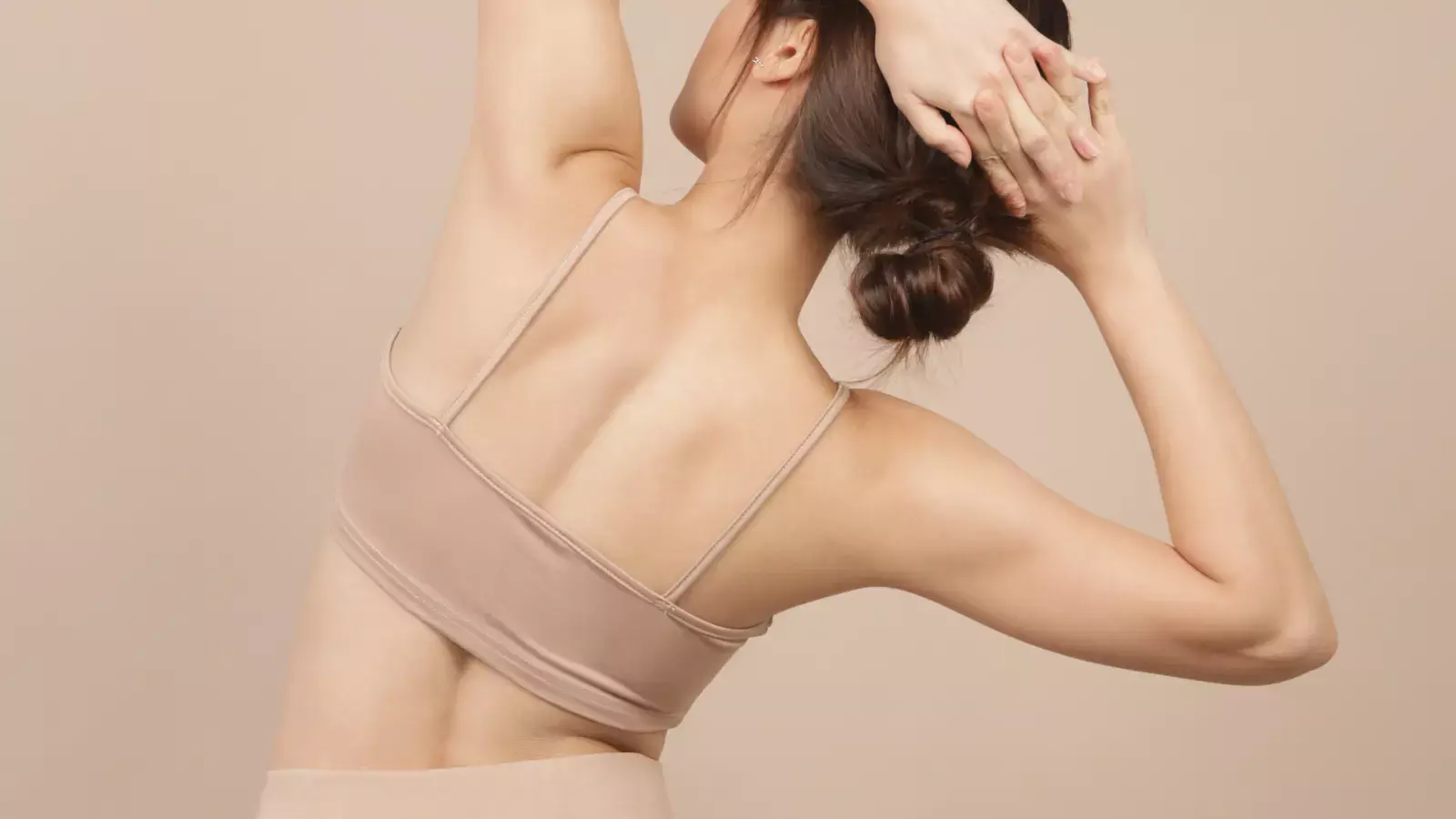
Scoliosis
A clear guide to scoliosis: causes, common symptoms, when to see a doctor and how chiropractic care may help.
Quick answer
Scoliosis is a sideways curve of the spine, and in most cases the exact cause is unknown. Chiropractic care does not aim to straighten the curve, but it may help manage discomfort, posture and movement so scoliosis gets in the way less. Children and teenagers with scoliosis should be monitored by a doctor as they grow, and anyone with numbness, weakness or difficulty breathing should see a doctor straight away.
What is scoliosis?
Scoliosis is a condition where the spine curves sideways, so it looks like a “C” or “S” shape when viewed from the front or back. Seen from this angle, a typical spine looks straight.
In most cases the exact cause is unknown, which is why the most common form is called idiopathic scoliosis (“idiopathic” means “of unknown cause”). In some people the curve can progress and cause more problems into adulthood, which is why monitoring matters.
Scoliosis facts
- Idiopathic scoliosis has no known cause and is the most common type.
- Congenital scoliosis is present from birth, because of differences in how the spinal bones formed.
- Neuromuscular scoliosis is linked to nerve or muscle conditions such as cerebral palsy or muscular dystrophy, while degenerative scoliosis comes from wear in the bones and joints.
- Functional scoliosis is a normal spine that looks curved because of another problem, such as uneven leg length or muscle spasm on one side.
What are the symptoms of scoliosis?
Scoliosis most often develops during the growth spurt just before puberty. Mild cases may cause no symptoms and are sometimes found only during a routine check-up. Signs can include:
- Uneven head, shoulders or hips, an uneven waist, or a hump in the rib cage or shoulder blade
- A visible curve in the spine when seen from behind, especially as it progresses
- Muscle imbalance, stiffness and reduced range of motion
- Poor posture
- Pain in the neck, shoulders, back or hips
- Feeling self-conscious about body shape
- In severe cases, the rib cage pressing on the lungs and heart, making breathing harder
What are the complications of scoliosis?
Complications depend on the size and location of the curve and the age at which it develops. Many people with mild scoliosis have few or none, and the risk rises as the curve gets larger.
- Chronic back pain, more often in adults than in children
- Reduced range of motion
- Concerns about appearance and lower self-esteem, especially in teenagers
- Faster wear of the spinal discs and joints in adults
- Pressure on the spinal cord or nerves, causing numbness, tingling or weakness
- In severe cases, reduced lung and heart function, a higher risk of chest infections, and digestive problems
- Risks from surgery, such as infection, bleeding, pain or nerve damage, or the curve returning
What causes scoliosis?
The exact cause of scoliosis is still largely unknown. Idiopathic scoliosis is the most common type, making up about 80% of cases. It most often affects children aged around 9 to 15, during growth spurts before puberty, but it can also start earlier or later in life.
Early scoliosis is easy to miss because the curve may be too small to notice. A doctor confirms the diagnosis with imaging that measures the curve, and a curve of 10 degrees or more is classed as scoliosis. A child may need regular checks to see whether it is progressing. A doctor will usually refer to a specialist if:
- The curve is 25 degrees or more
- The curve is getting larger at follow-up checks
- The curve bends to the left in the chest area
Children’s bones and joints are still growing, so their curve is more likely to progress, and habits such as poor posture while studying can add strain. Adults can have scoliosis too, either continuing from childhood or caused by age-related wear in the spine.
Do I need to see a doctor for scoliosis?
Yes. If you notice signs of scoliosis, see a doctor, who may refer you to an orthopaedic or spine specialist. Adolescence is a key time to monitor, because the spine can change quickly during growth spurts. Screening is sometimes done during routine child or school health checks.
See a doctor if you notice
- A visible curve in the spine, or the body leaning to one side
- One shoulder or hip higher than the other, or an uneven waist
- Ribs that stand out more on one side when bending forward
- Ongoing back pain, especially in adults
- A close family member with scoliosis, in which case regular screening is a good idea
Mild scoliosis may not need active treatment, but monitoring helps make sure the curve does not progress. See a doctor straight away if you develop numbness, weakness or difficulty breathing.
What are the treatments for scoliosis?
Treatment depends on the size, location and pattern of the curve, your age and whether the spine is still growing. Each case is different.
- Observation: for curves under about 20 to 25 degrees, especially near the end of growth, a doctor may recommend regular check-ups
- Bracing: for growing children with curves of about 25 to 45 degrees, a brace (such as an underarm or Milwaukee brace) aims to stop the curve getting worse rather than correct it
- Surgery: for severe or progressing curves, spinal fusion is the most common operation; very young children may have growing rods that are lengthened as they grow
- Pain management for adults, such as medicines, physiotherapy and sometimes injections
- Chiropractic care, which may help ease discomfort by improving joint movement and reducing muscle tension
Is chiropractic care good for scoliosis?
Chiropractic care does not aim to straighten a scoliosis curve. Instead, it aims to help you manage it so that it gets in the way of daily life less, alongside the monitoring your doctor recommends.
- A whole-body view: your chiropractor looks at the spine, pelvis and wider musculoskeletal system for imbalances that may add strain
- Non-invasive care for people who would like to avoid medicines or surgery where possible
- Better movement: adjustments and supporting therapies may increase range of motion, and some people feel relief soon after, though this varies
- Guidance on posture, exercise and ergonomic habits for you or your child
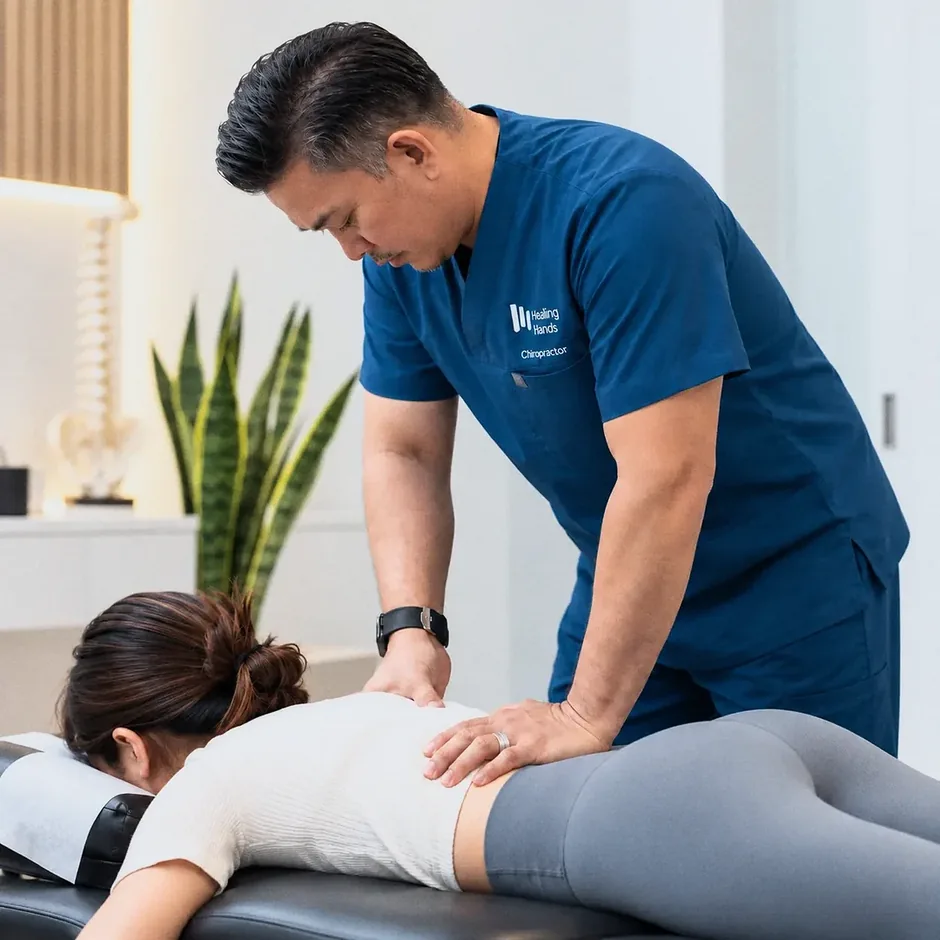
Your first visit includes an AI posture analysis, a Walker View gait analysis and a one-to-one consultation with the chiropractor. Where clinically suitable, care may include a gentle adjustment and supporting therapy such as E-stim, ultrasound or the flexion-distraction table (FDT). Children and teenagers should continue to be monitored by their doctor.
Why Healing Hands
Why choose Healing Hands Wellness?
Healing Hands Wellness Cambodia brings the Healing Hands approach to chiropractic care to our clinic in Phnom Penh, open every day.
Your first visit starts with an AI posture analysis, a Walker View gait analysis and a one-to-one consultation with a chiropractor, so your care plan is based on what we find. Our chiropractors use non-invasive techniques and explain each step before treatment.
Not sure what is causing your pain? Start with an assessment.
Your first visit includes an AI posture analysis, a Walker View gait analysis, a consultation with a chiropractor, an adjustment where suitable and supporting therapy, for US$68.
Your first visit
What to expect at your first visit.
Here is what happens at your first appointment, so you know what to expect before you arrive.
01
AI posture & gait analysis
Our AI posture analysis checks your posture from head to hips, and the Walker View gait analysis measures how you walk and share your weight. It is quick and painless.
02
Consultation
A one-to-one chat with your chiropractor about your health history, what you are feeling and what you would like to get back to doing.
03
Physical assessment
Simple movement and range-of-motion tests show how your body is moving today, so your chiropractor can decide whether an adjustment is right for you.
04
Chiropractic adjustment
If it is clinically safe, your chiropractor makes gentle, controlled adjustments by hand. A “pop” sound is normal; it is just gas being released from the joint.
05
Supporting therapy
E-stim, ultrasound or the flexion-distraction table (FDT) to help relax muscles and support your recovery.
Good to know
Questions,
answered.
Can’t find what you’re looking for? Message us and our team will happily help.
What does a chiropractor do?
A chiropractor provides non-invasive care, using spinal adjustments to help the joints move and work better. Care may be supported by therapies such as the flexion-distraction table, E-stim, ultrasound and exercises.
Can chiropractic care straighten scoliosis?
No. Chiropractic care does not aim to straighten the curve. It aims to help manage discomfort, posture and movement, alongside regular monitoring by your doctor.
Is chiropractic treatment painful?
An adjustment should not be painful. If an injury is recent, the muscles around it may feel tender to the touch, and your chiropractor will adapt your care to suit you.
What happens at my first visit?
Your first visit is US$68 and includes an AI posture analysis, a Walker View gait analysis, a consultation with the chiropractor, an adjustment where clinically suitable, and supporting therapy such as E-stim, ultrasound or FDT.
Conditions
Other conditions we help with
Our clinic in Phnom Penh
Find us in
Phnom Penh.
Visit our clinic in Phnom Penh, open every day, near home, near work or on your commute.
Address
No. 5 Wat Koh St (St. 81), 4th Floor, Phnom Penh 12211, Cambodia
Opening hours
Mon – Fri: 8:30 am – 1 pm, 2 – 6 pm
Sat – Sun: 8:30 am – 5 pm
Phone
Book your visit
Request an
appointment.
Tell us how to reach you and when suits you, and our team will be in touch to confirm your appointment.
- Personalised care across all services
- Open every day
- Quick appointment confirmation