
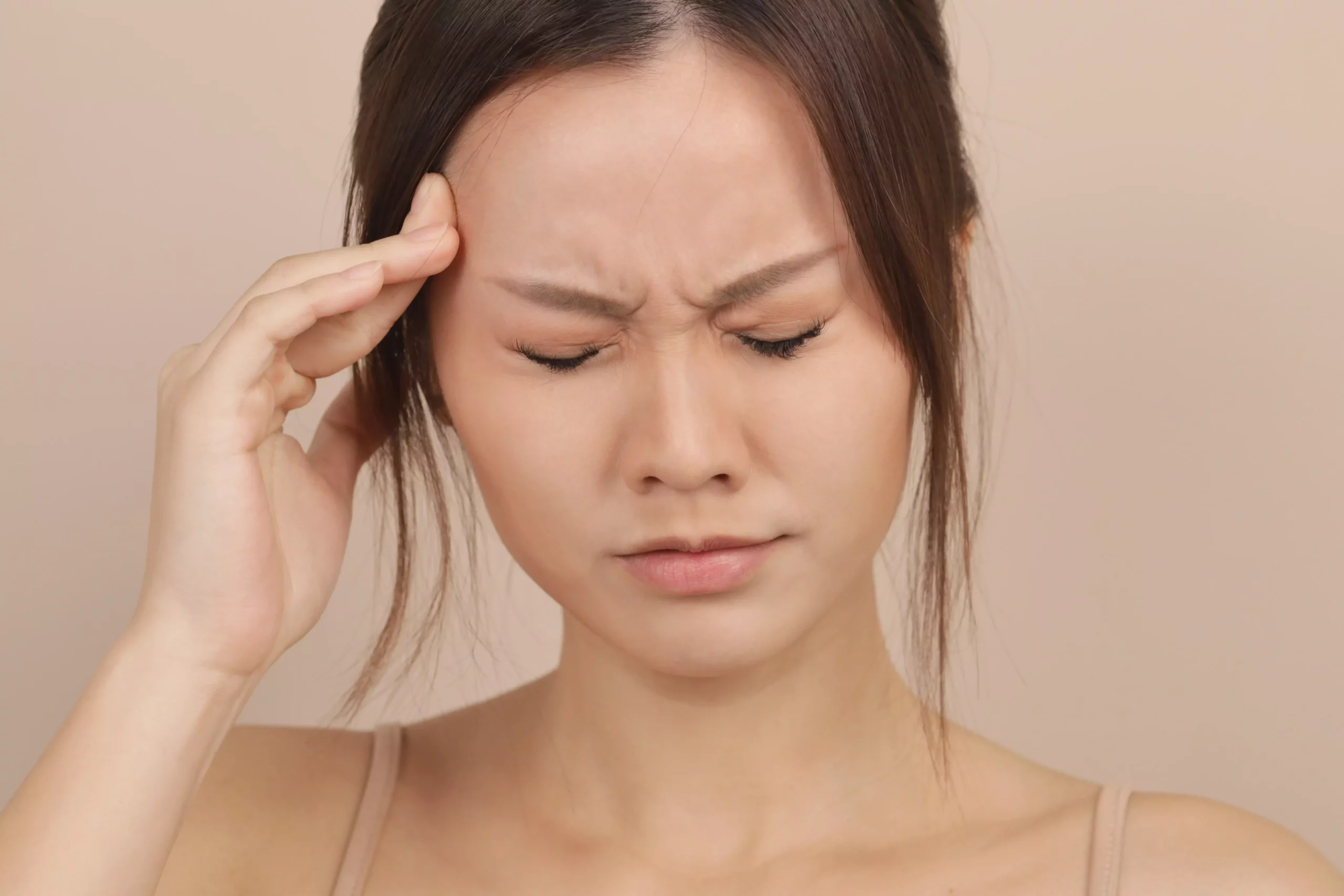
Headaches & Migraines
A clear guide to headaches and migraines: causes, common symptoms, when to see a doctor and how chiropractic care may help.
On this page
- What are headaches & migraines?
- What are the symptoms of headaches & migraines?
- What are the complications of headaches & migraines?
- What are the common causes of headaches & migraines?
- Do I need to see a doctor for headaches & migraines?
- What are the treatments for headaches & migraines?
- Is chiropractic care good for headaches & migraines?
Quick answer
Most headaches come from tension, stress, poor sleep or posture. Migraines are a more severe type of headache that can bring nausea and sensitivity to light or sound. If your headaches are linked to muscle tension or stiffness in the neck, chiropractic care may help reduce how often and how strongly they happen. See a doctor straight away for a sudden, severe headache, or one with confusion, weakness or changes in vision.
What are headaches & migraines?
Headaches and migraines are among the most common health complaints, and most people have them at some point. It can be hard to tell whether pain or pressure in your head is a typical headache or a migraine.
A headache is a common pain in the head with many possible causes, including stress, tension, allergies and illness. A migraine is usually more severe and can come with nausea, vomiting and sensitivity to light and sound.
Headaches & Migraines facts
- The World Health Organization (WHO) reports that 50% of all adults worldwide will experience a headache in any given year.
- Migraines can last from 4 hours to 3 days, or even longer.
- Overusing pain relief can cause rebound headaches.
What are the symptoms of headaches & migraines?
Both cause head pain but tend to feel different. Not everyone has every symptom, and severity varies.
Headaches
- A constant ache or pressure around the head, often at the temples or the back of the head and neck
- Usually felt on both sides of the head
- Often described as a tight band around the forehead or the back of the head
- Does not usually get worse with physical activity or come with other symptoms
Migraines
- Throbbing or pulsing pain, usually on one side of the head
- Pain that gets worse with physical activity
- Nausea or vomiting
- Sensitivity to light, sound and sometimes smell
- Shapes or bright spots (aura) shortly before the migraine starts (classic migraine)
- Sometimes other neurological symptoms, such as visual changes, vertigo or difficulty speaking (complicated migraine)
Seek medical advice for severe or frequent headaches or migraines, to find the cause and the right treatment.
What are the complications of headaches & migraines?
Headaches
- Chronic daily headaches: headaches on 15 or more days a month for over three months, often linked to stress, poor sleep or medication overuse
- Medication-overuse (rebound) headaches: taking pain relief too often can end up causing headaches rather than relieving them
Migraines
- Chronic migraines: migraines on 15 or more days a month for at least three months, greatly affecting quality of life
- Status migrainosus: a rare, serious migraine lasting over 72 hours that may need hospital care for pain and dehydration from vomiting
- Persistent aura without infarction: aura symptoms, often visual, lasting a week or more
- Migrainous infarction: a very rare type of migraine where aura symptoms lead to a stroke
- Serotonin syndrome: a rare, potentially life-threatening reaction when some migraine medicines, such as triptans, are combined with certain other drugs, including some antidepressants. It needs immediate medical attention
Repeated episodes can also affect mood, sleep, work and family life, and may contribute to anxiety or depression.
What are the common causes of headaches & migraines?
Headaches are often linked to everyday factors such as stress, diet and sleep. Migraines share many of these triggers but are also tied to brain changes, hormones and genetics, and their exact cause is not fully understood.
Common headache triggers
- Stress, anxiety and depression
- Lack of sleep or changes in sleep patterns
- Skipping meals, fasting or dehydration
- Foods with nitrates or MSG, and alcohol, especially red wine
- Too much caffeine, or caffeine withdrawal
- Poor posture or strain on the neck or back
- Some medications, or overusing pain relievers
- Glaucoma, sinusitis, flu or other infections involving the head
- Jaw joint (TMJ) disorders
Common migraine triggers
- Hormonal changes in women, particularly during menstruation, pregnancy or menopause
- Aged cheeses, alcohol, caffeine, MSG or aspartame
- Bright lights, sun glare, loud sounds or strong smells
- Too much or too little sleep
- Intense physical exertion
- Changes in the weather or air pressure
- Certain medications, such as oral contraceptives or vasodilators
Triggers vary from person to person. A headache diary can help you spot and avoid your own.
Do I need to see a doctor for headaches & migraines?
Occasional headaches can often be managed with over-the-counter pain relief and lifestyle changes. See a healthcare provider if:
- Your headache pattern changes: they become more frequent or severe, the pain moves, or it wakes you at night
- Your headaches come with confusion, dizziness, fever, intense neck pain, changes in vision, difficulty speaking, or weakness, numbness or tingling in your arms or legs
- Headaches are affecting your daily life, work or school
- Pain relievers are not helping, or you need them more than recommended or more than two days a week
See a doctor straight away for a sudden, severe headache, as it could be a sign of a serious condition such as stroke. For migraines, a doctor can help you plan prevention, often combining medication and lifestyle changes.
What are the treatments for headaches & migraines?
Treatment depends on the type, frequency and severity of your headaches and your overall health. Always discuss options with a healthcare provider.
- Pain relief: paracetamol, ibuprofen or aspirin, or stronger prescription medicines. For migraine attacks, doctors may also use triptans, ergots and anti-nausea medicines
- Preventive medication: for frequent episodes, a doctor may suggest daily medicines such as certain antidepressants, anticonvulsants or beta blockers. Botox injections and newer CGRP inhibitors are also used for migraines
- Lifestyle changes: regular sleep, exercise, a healthy diet and avoiding known triggers
- Behavioural therapies: cognitive behavioural therapy, relaxation training or biofeedback, especially for chronic headaches
- Chiropractic care: spinal adjustments, particularly of the neck, with posture and lifestyle advice
Is chiropractic care good for headaches & migraines?
Chiropractic care may help when headaches or migraines are linked to muscle tension, stiffness or posture in the neck and upper back. Some studies suggest spinal adjustments may reduce how often and how strongly they happen in some people. Chiropractors can also advise on posture, ergonomics, exercise, relaxation and diet to help reduce triggers.
At Healing Hands Wellness Cambodia, your first visit includes an AI posture analysis, a Walker View gait analysis and a one-to-one consultation with the chiropractor. Where clinically suitable, this is followed by a gentle adjustment and supporting therapy such as E-stim or ultrasound. Your chiropractor will explain each step and tell you if you need a doctor’s care.
Why Healing Hands
Why choose Healing Hands Wellness?
Healing Hands Wellness Cambodia brings the Healing Hands approach to chiropractic care to our clinic in Phnom Penh, open every day.
Your first visit starts with an AI posture analysis, a Walker View gait analysis and a one-to-one consultation with a chiropractor, so your care plan is based on what we find. Our chiropractors use non-invasive techniques and explain each step before treatment.
Not sure what is causing your pain? Start with an assessment.
Your first visit includes an AI posture analysis, a Walker View gait analysis, a consultation with a chiropractor, an adjustment where suitable and supporting therapy, for US$68.
Your first visit
What to expect at your first visit.
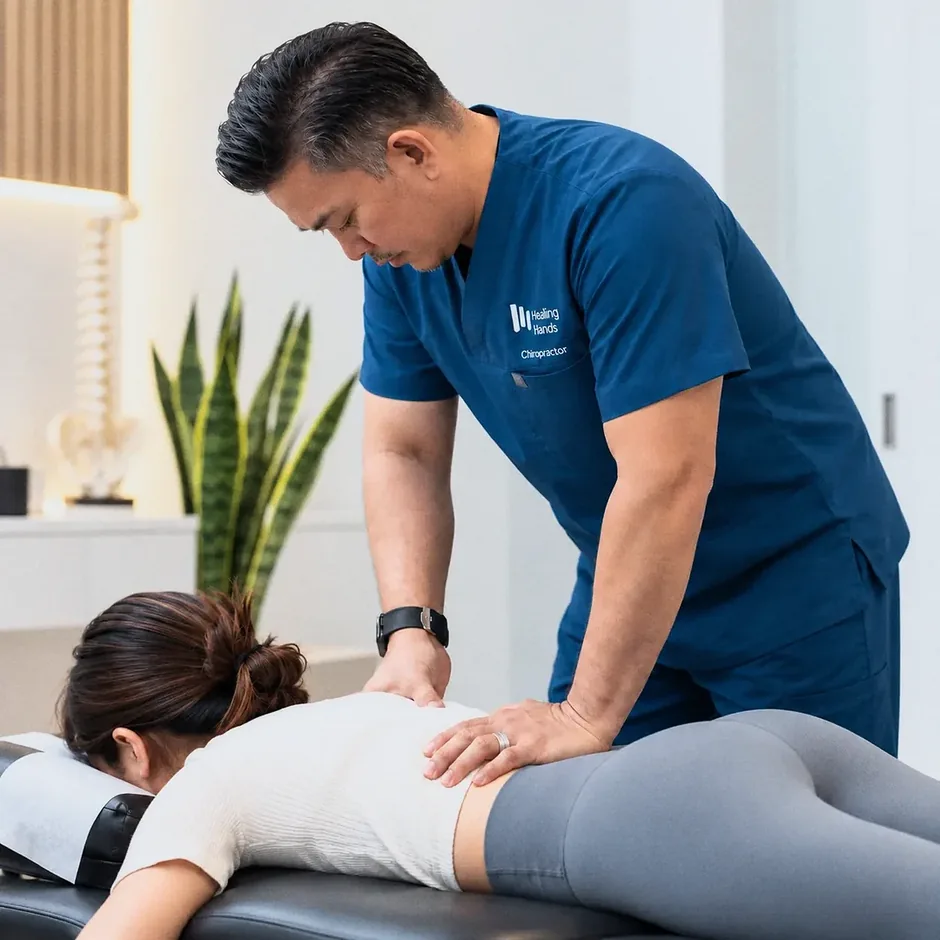
Here is what happens at your first appointment, so you know what to expect before you arrive.
01
AI posture & gait analysis
Our AI posture analysis checks your posture from head to hips, and the Walker View gait analysis measures how you walk and share your weight. It is quick and painless.
02
Consultation
A one-to-one chat with your chiropractor about your health history, what you are feeling and what you would like to get back to doing.
03
Physical assessment
Simple movement and range-of-motion tests show how your body is moving today, so your chiropractor can decide whether an adjustment is right for you.
04
Chiropractic adjustment
If it is clinically safe, your chiropractor makes gentle, controlled adjustments by hand. A “pop” sound is normal; it is just gas being released from the joint.
05
Supporting therapy
E-stim, ultrasound or the flexion-distraction table (FDT) to help relax muscles and support your recovery.
Good to know
Questions,
answered.
Can’t find what you’re looking for? Message us and our team will happily help.
Can chiropractic care help with migraines?
It may help some people, especially when migraines are linked to neck tension or stiffness. Some studies suggest spinal adjustments may reduce how often and how strongly migraines happen. Your chiropractor will assess you first and work alongside any care from your doctor.
Are neck adjustments safe?
Neck adjustments are generally safe when performed by a trained chiropractor using the correct technique. Your chiropractor checks that an adjustment is clinically suitable before giving one, and can use gentle techniques by hand or with a small instrument.
Is chiropractic treatment painful?
Adjustments are generally painless. If an injury is recent, muscles may feel tender for a short time. A popping sound is normal; it is gas being released from the joint.
What happens at my first visit?
Your first visit is US$68 and includes an AI posture analysis, a Walker View gait analysis, a one-to-one consultation with the chiropractor, an adjustment where clinically suitable, and supporting therapy such as E-stim, ultrasound or the flexion-distraction table (FDT).
Conditions
Other conditions we help with
Our clinic in Phnom Penh
Find us in
Phnom Penh.
Visit our clinic in Phnom Penh, open every day, near home, near work or on your commute.
Address
No. 5 Wat Koh St (St. 81), 4th Floor, Phnom Penh 12211, Cambodia
Opening hours
Mon – Fri: 8:30 am – 1 pm, 2 – 6 pm
Sat – Sun: 8:30 am – 5 pm
Phone
Book your visit
Request an
appointment.
Tell us how to reach you and when suits you, and our team will be in touch to confirm your appointment.
- Personalised care across all services
- Open every day
- Quick appointment confirmation