
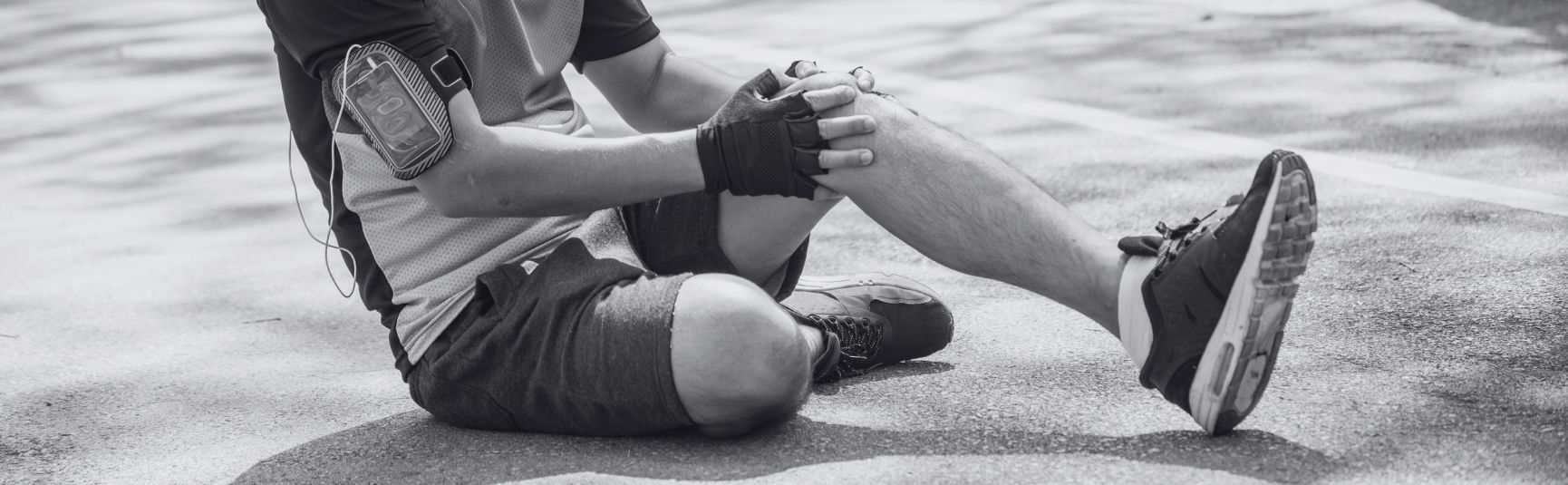
Strains & Sprains
A clear guide to strains & sprains: causes, common symptoms, when to see a doctor and how chiropractic care may help.
On this page
- What are strains and sprains?
- What are the complications of strains and sprains?
- What are the common causes of strains and sprains?
- Do I need to see a doctor for a strain or sprain?
- What are the treatments for strains and sprains?
- What can I do at home for a strain or sprain?
- Is chiropractic care good for strains and sprains?
Quick answer
A strain is an overstretched or torn muscle or tendon; a sprain is an injury to the ligaments around a joint. Both are common and usually follow overexertion, sudden movements, twists or falls. Once a serious injury has been ruled out, chiropractic care may help manage pain and restore movement as part of your recovery. See a doctor if you cannot put weight on the limb, the joint looks deformed, or the swelling is severe.
What are strains and sprains?
A strain, also called a pulled muscle, is the stretching or tearing of muscle fibres or tendons (the tissues that connect muscles to bones) because of excessive force or overexertion.
A sprain is an injury to the ligaments, the tough bands of tissue that connect bones together at a joint. Strains affect muscles and tendons; sprains affect ligaments.
Strain or sprain: the main differences
- Where: strains affect muscles or tendons; sprains affect the ligaments at a joint.
- Causes: strains usually follow excessive force, overexertion or sudden movements; sprains often happen when a joint is twisted, hit or forced too far, for example in a fall.
- Symptoms: strains cause pain, swelling, muscle spasm, weakness and limited movement; sprains cause pain, swelling, bruising, tenderness, joint instability and limited movement.
- Severity: both are graded as mild, moderate or severe, depending on how much tissue is stretched or torn.
- Common areas: strains often affect the back, neck, shoulders, hamstrings, thighs and calves; sprains often affect the ankles, wrists, knees and fingers.
Strains & sprains facts
- A strain affects a muscle or tendon; a sprain affects the ligaments that hold a joint together.
- Both strains and sprains are graded as mild, moderate or severe.
- Sprains most often affect the ankles, wrists, knees and fingers.
What are the complications of strains and sprains?
Most strains and sprains heal well with the right care and rehabilitation, but complications can sometimes arise:
- Chronic pain: pain that continues after the injury has healed, often linked to incomplete healing, re-injury, muscle imbalances or unfinished rehabilitation.
- Muscle weakness and imbalance: resting the area for a long time can weaken muscles and change how you move, putting extra stress on other muscles and joints.
- Joint instability: severe sprains with complete ligament tears can leave a joint feeling loose or prone to dislocation, which may need further medical treatment such as surgical repair.
- Limited movement: scar tissue and stiffness can reduce flexibility if the injury is not rehabilitated properly.
- Recurring injuries: if the underlying causes are not addressed, the same area is more likely to be injured again.
What are the common causes of strains and sprains?
Strains and sprains can happen during many everyday and sporting activities. Common causes include:
- Overexertion: lifting heavy objects, vigorous exercise or intense, repetitive movements.
- Poor warm-up or stretching, which leaves muscles and ligaments unprepared.
- Fatigue: tired muscles give less support and are more easily injured.
- Sudden movements or impact: quick changes of direction, sudden stops or collisions.
- Poor conditioning and muscle imbalances, which reduce support around joints.
- Unsuitable equipment, such as ill-fitting shoes or a lack of protective gear.
- Falls, slips and accidents that twist or impact a joint.
- Previous injuries, which can leave an area weaker and more prone to injury.
Do I need to see a doctor for a strain or sprain?
Consider seeing a doctor if you have:
- Severe pain, significant swelling or bruising.
- Inability to put weight on the limb or move the joint.
- A joint that looks deformed.
- Symptoms that persist or get worse after a few days of home care.
- Repeated injuries in the same area.
- Limited movement that stops you doing normal activities.
- Existing health conditions, complications or other concerns.
A doctor can assess the injury, provide the right treatment and address any underlying issues to support your recovery.
What are the treatments for strains and sprains?
Early treatment usually follows the RICE approach (rest, ice, compression, elevation), followed by gradual rehabilitation:
- Rest: rest the injured muscle or joint to allow healing and prevent further damage.
- Ice: apply ice for 15 to 20 minutes every 2 to 3 hours to help reduce pain and swelling.
- Compression: an elastic bandage or compression sleeve can reduce swelling and give support.
- Elevation: raise the injured limb above heart level to help reduce swelling.
- Pain relief: over-the-counter medicines such as paracetamol or anti-inflammatory medicines (NSAIDs) may help manage pain.
- Gradual movement and rehabilitation: once pain and swelling settle, guided exercises help restore strength, flexibility and movement.
- Chiropractic care: assessment, manual therapy, rehabilitation exercises and advice may support recovery.
What can I do at home for a strain or sprain?
Home remedies that may provide relief include:
- Heat or cold: alternating a warm towel or heating pad with an ice pack may help ease pain.
- Gentle massage: may improve blood flow and ease muscle tension.
- Gentle stretching, guided by a healthcare professional, to prevent stiffness as the injury heals.
- Rest and sleep: enough rest and sleep help your body recover.
Is chiropractic care good for strains and sprains?
A chiropractor may support your recovery from a strain or sprain in several ways:
- Assessment: chiropractors are trained to assess muscle and joint problems, check how severe the injury is and look for underlying issues.
- Non-invasive care: a conservative, drug-free approach that avoids medication or surgery where possible.
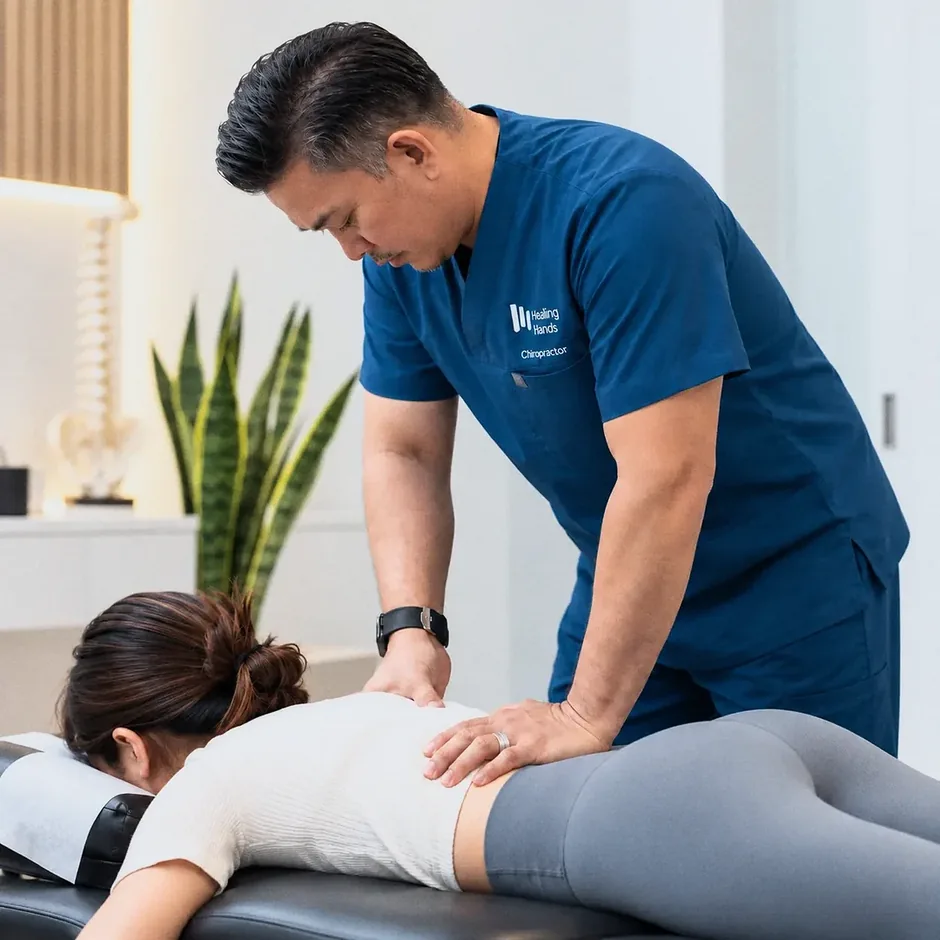
- Manual therapy: chiropractic adjustment, joint mobilisation and soft tissue techniques aim to ease pain, reduce muscle tension and restore joint movement.
- Rehabilitation exercises: tailored exercises and stretches to strengthen the injured area and improve flexibility.
- Supporting therapy: E-stim, ultrasound and heat or cold therapy may help ease pain and swelling. For tendon and soft tissue problems, shockwave therapy is also available where suitable.
- Prevention advice: guidance on body mechanics, posture and exercises to lower the risk of future injuries.
At Healing Hands Wellness in Phnom Penh, your first visit includes an AI posture analysis, a Walker View gait analysis, a one-to-one consultation with the chiropractor and an adjustment where clinically suitable. Every injury is different, so it is important to consider how severe yours is and check with a healthcare professional about the most suitable approach.
Why Healing Hands
Why choose Healing Hands Wellness?
Healing Hands Wellness Cambodia brings the Healing Hands approach to chiropractic care to our clinic in Phnom Penh, open every day.
Your first visit starts with an AI posture analysis, a Walker View gait analysis and a one-to-one consultation with a chiropractor, so your care plan is based on what we find. Our chiropractors use non-invasive techniques and explain each step before treatment.
Not sure what is causing your pain? Start with an assessment.
Your first visit includes an AI posture analysis, a Walker View gait analysis, a consultation with a chiropractor, an adjustment where suitable and supporting therapy, for US$68.
Your first visit
What to expect at your first visit.
Here is what happens at your first appointment, so you know what to expect before you arrive.
01
AI posture & gait analysis
Our AI posture analysis checks your posture from head to hips, and the Walker View gait analysis measures how you walk and share your weight. It is quick and painless.
02
Consultation
A one-to-one chat with your chiropractor about your health history, what you are feeling and what you would like to get back to doing.
03
Physical assessment
Simple movement and range-of-motion tests show how your body is moving today, so your chiropractor can decide whether an adjustment is right for you.
04
Chiropractic adjustment
If it is clinically safe, your chiropractor makes gentle, controlled adjustments by hand. A “pop” sound is normal; it is just gas being released from the joint.
05
Supporting therapy
E-stim, ultrasound or the flexion-distraction table (FDT) to help relax muscles and support your recovery.
Good to know
Questions,
answered.
Can’t find what you’re looking for? Message us and our team will happily help.
What does a chiropractor do?
A chiropractor provides non-invasive care, using chiropractic adjustments to improve how the joints and spine move. Care may be supported by therapies such as the flexion-distraction table (FDT), E-stim, ultrasound and functional exercises.
When should I see a chiropractor?
Consider seeing a chiropractor if you have ongoing aches, pain or stiffness in your muscles or joints, once a serious injury has been ruled out. Your first visit is US$68 and includes an AI posture analysis, a Walker View gait analysis and a consultation with the chiropractor.
Is chiropractic treatment painful?
A chiropractic adjustment should not be painful. If an injury is recent or still healing, muscles and ligaments may feel guarded or tender to the touch. A thorough examination can help answer any concerns you have.
What is a chiropractic adjustment?
Your chiropractor uses their hands or a small instrument to apply a gentle, controlled force to a joint. You may hear a “pop”, which is simply gas being released from the joint.
Conditions
Other conditions we help with
Our clinic in Phnom Penh
Find us in
Phnom Penh.
Visit our clinic in Phnom Penh, open every day, near home, near work or on your commute.
Address
No. 5 Wat Koh St (St. 81), 4th Floor, Phnom Penh 12211, Cambodia
Opening hours
Mon – Fri: 8:30 am – 1 pm, 2 – 6 pm
Sat – Sun: 8:30 am – 5 pm
Phone
Book your visit
Request an
appointment.
Tell us how to reach you and when suits you, and our team will be in touch to confirm your appointment.
- Personalised care across all services
- Open every day
- Quick appointment confirmation