
Pregnancy Discomfort
A clear guide to pregnancy discomfort: causes, common symptoms, when to see a doctor and how chiropractic care may help.
On this page
- What is pregnancy discomfort?
- What are the symptoms of pregnancy discomfort?
- What are the complications of pregnancy discomfort?
- What causes pregnancy discomfort?
- Do I need to see a doctor for pregnancy discomfort?
- What are the treatments for pregnancy discomfort?
- Is chiropractic care good for pregnancy discomfort?
Quick answer
Back, pelvic and hip discomfort is common in pregnancy as your posture, weight and hormones change. Chiropractic care adapted for pregnancy focuses on spinal and pelvic alignment and may help you stay more comfortable. Check with your obstetrician or doctor first, keep up your prenatal check-ups, and tell both your doctor and your chiropractor about any pregnancy complications. See a doctor straight away for vaginal bleeding, severe abdominal pain, sudden swelling of the face or hands, or less movement from your baby.
What is pregnancy discomfort?
During pregnancy, your body goes through many physical and hormonal changes to support your growing baby. Many women feel some discomfort along the way, such as back pain, pelvic pain, tiredness or swelling.
Regular prenatal visits are recommended to look after the health of both mother and baby. Complications can arise, but with proper care many women have relatively routine pregnancies.
Pregnancy discomfort facts
- A growing baby shifts your centre of gravity, which can strain the back.
- The hormone relaxin loosens the pelvic joints during pregnancy, which can cause pelvic discomfort.
- Regular prenatal check-ups help identify and manage potential complications early.
What are the symptoms of pregnancy discomfort?
Common pregnancy discomforts include:
- Back pain from extra weight, a shifting centre of gravity and hormones that loosen joints and ligaments
- Breast tenderness early in pregnancy
- Tiredness, especially in the first and third trimesters
- Needing to pass urine more often
- Constipation and haemorrhoids
- Shortness of breath as the uterus presses up against the diaphragm
- Swollen feet and ankles from fluid retention
- Round ligament pain: sharp or dull pain in the lower abdomen or groin
- Leg cramps, often at night in the second and third trimesters
- Trouble sleeping and mood swings
Tell your doctor about any discomfort, as some symptoms may be a sign of something more serious.
What are the complications of pregnancy discomfort?
Most pregnancy discomforts are normal, but some symptoms can be a sign of a complication:
- Severe morning sickness (hyperemesis gravidarum): persistent vomiting that can cause dehydration and weight loss
- Preeclampsia: high blood pressure with severe headaches, vision problems, pain below the ribs, or sudden swelling of the face, hands or feet
- Gestational diabetes: symptoms are often mild, but it needs treatment to lower the risk of complications
- Placental abruption: severe abdominal pain and vaginal bleeding
- Preterm labour: regular contractions, pelvic pressure, lower back pain or spotting before 37 weeks
- Deep vein thrombosis (DVT): sudden swelling or pain in one leg, especially with redness and warmth
- Ectopic pregnancy: sharp pain in the abdomen, neck or shoulder with vaginal bleeding
- Miscarriage: severe abdominal or back pain, contractions, or bright red or brown bleeding
If you have any severe, persistent or unusual symptoms, seek medical attention immediately.
What causes pregnancy discomfort?
Pregnancy discomforts come from hormonal changes, the growth of the baby and uterus, and changes in how the body works.
- Hormonal changes: hCG is thought to contribute to morning sickness, while oestrogen and progesterone can cause breast tenderness and mood swings.
- More blood volume: this can strain the veins and contribute to varicose veins, haemorrhoids, breathlessness and swelling.
- A growing baby and uterus: these shift your centre of gravity, straining the back, and press on the stomach and bladder, causing heartburn and frequent urination.
- Changes in muscles and joints: the hormone relaxin loosens the pelvic joints, which can cause pelvic pain. Leg cramps may also occur.
- Digestive changes: higher progesterone slows the bowel, which can lead to constipation.
Do I need to see a doctor for pregnancy discomfort?
Many discomforts are expected and can be discussed at your routine check-up. Others need prompt medical care.
Usually fine to raise at a routine check-up
- Minor swelling of the ankles and feet
- Mild to moderate back pain or heartburn
- Occasional dizziness, faintness or headaches
- Mild shortness of breath
- General tiredness
See a doctor straight away if you have
- Persistent or severe back pain
- Severe or persistent abdominal pain
- Vaginal bleeding or spotting, or fluid leaking or gushing from the vagina
- Severe or persistent vomiting
- Pain or burning when passing urine, or very dark or bloody urine
- Severe or persistent headaches, or vision changes such as blurring, double vision, spots or flashing lights
- Chills or fever
- Sudden swelling of the face, hands or feet
- Less movement from your baby after 28 weeks, or a clear change in the pattern
- Painful or regular contractions before 37 weeks
- Sudden weight gain or too little weight gain
- Pain or cramps in the lower leg
- Shortness of breath, chest pain or coughing up blood
- Severe pain below the ribs
- Persistent itching, especially with yellowing of the skin or eyes
- Any injury to the abdomen
This list is not complete. If you are ever unsure about a symptom, contact your obstetrician or doctor.
What are the treatments for pregnancy discomfort?
Managing pregnancy discomfort often combines home measures, lifestyle changes and medical care. Always check with your obstetrician or doctor before taking any medicine or supplement during pregnancy.
- Morning sickness: medicines your doctor may prescribe if needed
- Heartburn and indigestion: antacids, with advice before longer use
- Back pain: chiropractic care adapted for pregnancy, and tailored exercises
- Constipation and haemorrhoids: stool softeners, creams or pads your doctor considers safe
- Infections: antifungal creams or pregnancy-safe antibiotics as advised
- Gestational diabetes and preeclampsia: medicines or insulin managed by your doctor
Care at Healing Hands Wellness Cambodia
Your first visit includes an AI posture analysis, a Walker View gait analysis and a one-to-one consultation with the chiropractor about your pregnancy and health history. Where clinically suitable, it also includes a gentle chiropractic adjustment and supporting therapy, with positioning and techniques adapted for pregnancy.
Is chiropractic care good for pregnancy discomfort?
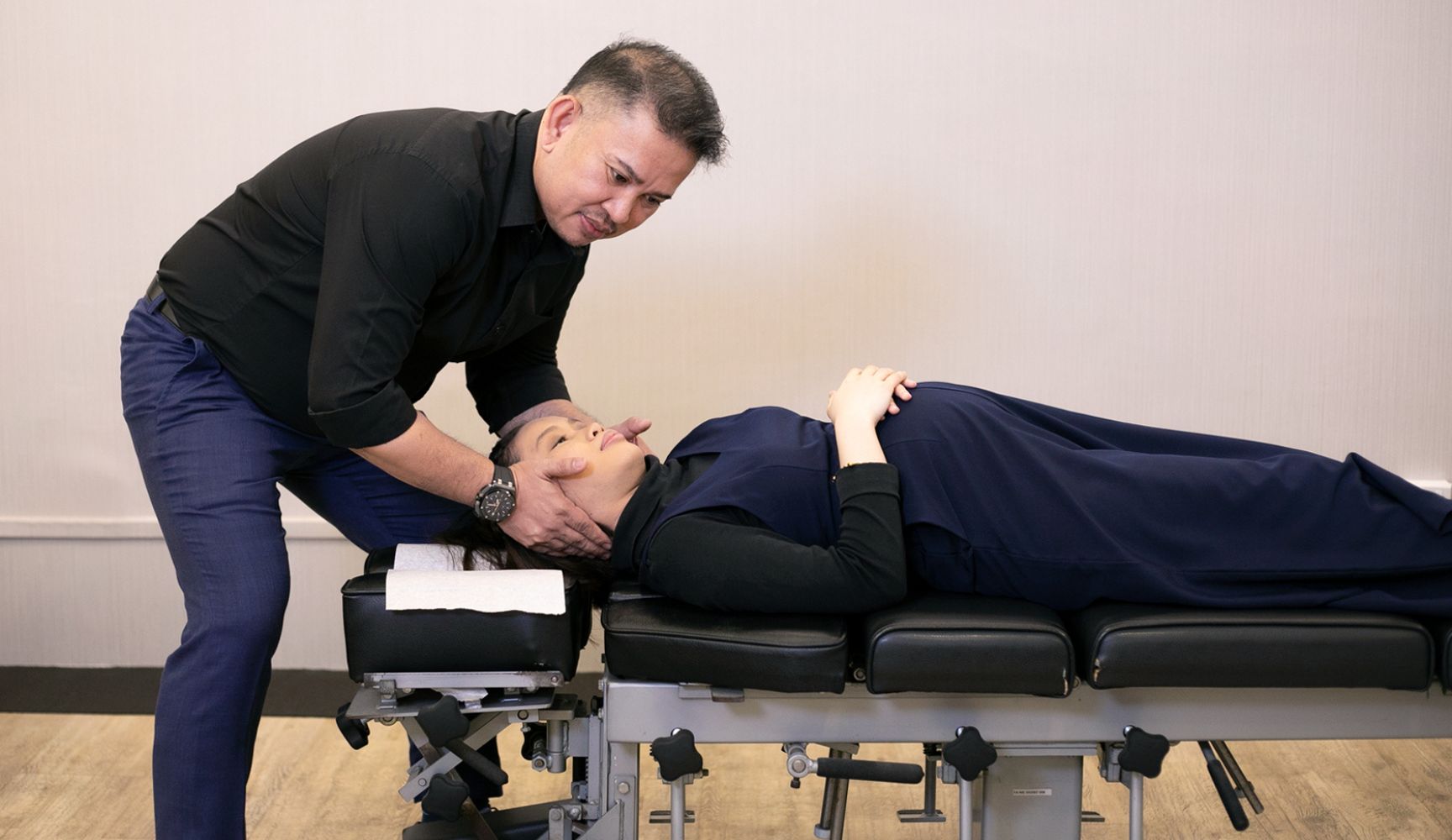
Chiropractic care during pregnancy is a non-invasive approach to common muscle, joint and nerve complaints. It focuses on spinal alignment and pelvic balance, and aims to support mobility and relaxed supporting muscles as your body changes.
- It may help relieve back, neck, pelvic and other joint pain
- It aims to support comfort in everyday activities such as walking, sleeping and, later, nursing
- It is adapted for pregnancy, with gentle techniques, stretches and specific exercises
Pregnancy, labour and delivery, whether vaginal or by caesarean section, can change the alignment of the pelvis and the lower and mid back. This can cause aches during and after pregnancy, and postnatal chiropractic care may help.
Please check with your obstetrician or doctor before starting chiropractic care, and tell your chiropractor about any pregnancy complications.
Why Healing Hands
Why choose Healing Hands Wellness?
Healing Hands Wellness Cambodia brings the Healing Hands approach to chiropractic care to our clinic in Phnom Penh, open every day.
Your first visit starts with an AI posture analysis, a Walker View gait analysis and a one-to-one consultation with a chiropractor, so your care plan is based on what we find. Our chiropractors use non-invasive techniques and explain each step before treatment.
Not sure what is causing your pain? Start with an assessment.
Your first visit includes an AI posture analysis, a Walker View gait analysis, a consultation with a chiropractor, an adjustment where suitable and supporting therapy, for US$68.
Your first visit
What to expect at your first visit.
Here is what happens at your first appointment, so you know what to expect before you arrive.
01
AI posture & gait analysis
Our AI posture analysis checks your posture from head to hips, and the Walker View gait analysis measures how you walk and share your weight. It is quick and painless.
02
Consultation
A one-to-one chat with your chiropractor about your health history, what you are feeling and what you would like to get back to doing.
03
Physical assessment
Simple movement and range-of-motion tests show how your body is moving today, so your chiropractor can decide whether an adjustment is right for you.
04
Chiropractic adjustment
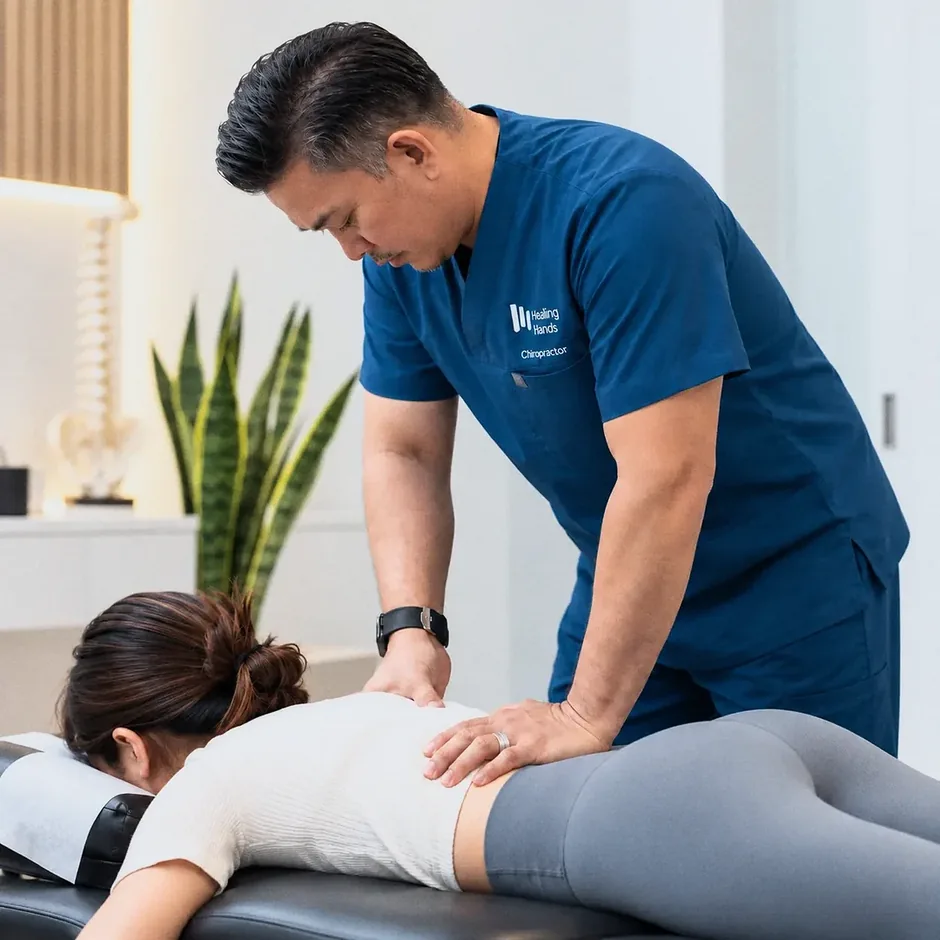
If it is clinically safe, your chiropractor makes gentle, controlled adjustments by hand. A “pop” sound is normal; it is just gas being released from the joint.
05
Supporting therapy
E-stim, ultrasound or the flexion-distraction table (FDT) to help relax muscles and support your recovery.
Good to know
Questions,
answered.
Can’t find what you’re looking for? Message us and our team will happily help.
Is chiropractic care safe during pregnancy?
When carried out by a trained chiropractor and adapted for pregnancy, chiropractic care is generally considered safe. Check with your obstetrician or doctor first, and tell your chiropractor about any complications.
Is chiropractic treatment painful?
Chiropractic adjustments should not be painful. Your chiropractor will use gentle techniques and positions that are comfortable during pregnancy, and explain each step.
What is a chiropractic adjustment?
The chiropractor uses their hands or a small instrument to apply a gentle, controlled force to a joint. You may hear a “pop”, which is simply gas being released from the joint.
What happens at my first visit?
Your first visit is US$68. It includes an AI posture analysis, a Walker View gait analysis, a one-to-one consultation with the chiropractor and, where clinically suitable, an adjustment and supporting therapy adapted for pregnancy.
Conditions
Other conditions we help with
Our clinic in Phnom Penh
Find us in
Phnom Penh.
Visit our clinic in Phnom Penh, open every day, near home, near work or on your commute.
Address
No. 5 Wat Koh St (St. 81), 4th Floor, Phnom Penh 12211, Cambodia
Opening hours
Mon – Fri: 8:30 am – 1 pm, 2 – 6 pm
Sat – Sun: 8:30 am – 5 pm
Phone
Book your visit
Request an
appointment.
Tell us how to reach you and when suits you, and our team will be in touch to confirm your appointment.
- Personalised care across all services
- Open every day
- Quick appointment confirmation